
Yorkshire Terrier Teeth FAQ and Dental Care
Overview
Good dental hygiene is important for all dogs, but especially for toy breeds like the Yorkshire Terrier that are prone to dental issues including tooth decay, jawbone deterioration and tooth loss. This section covers some FAQ regarding a Yorkie's teeth, why dental care is important, how to take good care of your Yorkie's teeth at home, and what is involved with professional dental cleanings at the veterinarian's office.
Please note: YorkieInfoCenter is reader-supported, and some of the product suggestions on this page are affiliate links. As an Amazon Associate we earn from qualifying purchases. This is at no extra cost to you and helps us continue providing free, high-quality information.


Don't need the details right now and just want to see recommendations for at-home dental cleaning for your Yorkie? Jump to How to Keep Your Yorkie's Teeth Clean.
How Many Teeth Do Yorkshire Terriers Have?
Like most other canines, Yorkshire Terriers pups are born without any teeth. A puppy will have 28 deciduous teeth (also known as puppy teeth or milk teeth) that erupt through the gums and are in place by the 6-week mark. During the process known as teething, those 28 teeth are gradually replaced by 42 permanent adult teeth. The adult teeth are typically all in place by the 8 to 10 month mark.
Yorkshire Terrier Bite Set
Yorkshire Terriers generally have have have one of two bite sets: a scissors bite or level bite.
A scissor bite is when the incisor teeth in the upper jaw are in contact with but slightly overlap those in bottom jaw. This creates a scissor appearance due to the pre-molars and molars meeting down the side of the mouth.
A level bite is one where the incisor teeth meet exactly, surface to surface.
Why Yorkshire Terriers are Prone to Dental Issues
Yorkshire Terriers, like many toy-sized breeds, are prone to dental issues mainly due to the anatomy of their teeth within their smaller cranial features.
With puppies, misalignment (malocclusion) is common and is often caused by an adult tooth erupting in an abnormal position due to a retained puppy tooth (creating a 'double row' of teeth); this should be treated via extraction (vet procedure) as soon as it is noticed to prevent permanent misalignment issues.
With adult Yorkshire Terriers (1 year and up), there may also be tooth crowding, rotation of teeth due to short tooth roots, and a genetic predisposition for early degeneration of jaw bone density. Overcrowding and rotation, in particular, can lead to hard-to-clean areas.
Improperly cleaned teeth, or teeth that are not cleaned, can cause many issues including:
- Buildup of plaque and tartar which eats away at tooth enamel and can easily move under the gum line to cause hidden damage
- Tooth decay
- Gingivitis (gum disease)
- Periodontal disease (infection caused by bacteria found in plaque)
- Deterioration of the jaw bone (caused by periodontal disease)
- Tooth loss, which is often the inevitable result of dental neglect and/or subpar cleaning
Ahead, we cover easy steps to keep your Yorkie's teeth and gums in great shape, to help prevent these issues.
How to Keep Your Yorkie's Teeth Clean
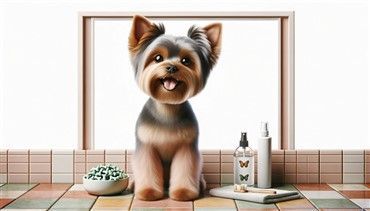

Fortunately, there are steps you can take to help keep your Yorkie's teeth and gums in great shape and prevent many of the issues commonly seen with this breed. Effective ways to keep your Yorkie's teeth clean include:
- If needed, take your Yorkie to the vet for a dental exam and possible full-dental cleaning
- Brush your Yorkie's teeth
- Use dental wipes
- Use a dental spray
- Use a water supplement
- Offer a daily dental chew
Let's look at the details of these:
#1 A Vet Checkup, If Needed:
If it has been a year or more since the last vet visit or you suspect a serious dental issue with your Yorkie, bring your little guy or gal for an vet exam. The teeth will be examined and any current issues will be resolved. Note that this may involve a ‘full dental’, which requires sedation (more info ahead). Once complete, you can implement an at-home regimen of proper dental hygiene to help prevent future issues.
#2: Brush Your Yorkie's Teeth:
This is one of the most effective methods to clean a Yorkshire Terrier's teeth and prevent decay and other common issues. Brushing should be done daily. If your Yorkie has a low tolerance, start with short sessions and work your way up to 3 or 4 minutes, taking care to scrub all teeth surfaces, angling downward toward the gums.
Be sure to use a canine toothpaste which is non-foaming and fluoride-free (since dogs swallow the paste, soaping agents can be a choking hazard and fluoride is toxic to canines).
You can use a fingertip brush which is a small doodad that slips over your index finger or a canine handled toothbrush that is sized appropriately for small dogs.
For this, we recommend the Nylabone Advanced Oral Care Dental Kit , which contains an effective paste as well as both types of brushes; please note that the 'puppy' size (which is sized for all dog breeds in general) usually works well for Yorkies of all ages.
#3 Use dental wipes:
Brushing should be tried first, however if a Yorkie has a proven intolerance for that, certain wipes may help keep teeth clean, especially when used in conjunction with other cleaning methods (more ahead). Also note that wipes can work well as a preventative step to stop the accumulation of plaque and tartar, but are seldom effective on their own in removing heavy buildup.
A recommended dental wipe for Yorkies is John Paul Tooth and Gum Pet Wipes ; it can be effective when used daily, is all-natural and is made in the USA.
#4 Use a dental spray:
A spray should be thought of as a supplemental tool and not the primary method of keeping your Yorkshire Terrier's teeth clean. This said, it can play a role in good oral care. Do note that some are formulated simply to freshen a dog's breath in cases of halitosis, so you'll want to choose one designed to keep plaque at bay.
We like Pets Are Kids Too Premium Dental Spray. It has baking soda, aloe and peppermint. Though you can add it to your Yorkie's water, it works best when sprayed directly on the teeth. Water additives that you do add to a dog's drinking water are discussed next.
#5 Use a water supplement:
As with sprays, this also cannot replace the need for brushing your Yorkie's teeth; however, it serves as an excellent additional tool for enhancing your little guy or gal's dental hygiene. Typically, these products contain enzymes or antiseptics to combat mouth bacteria effectively. They're formulated for easy addition to your dog's water and are usually flavorless to ensure acceptance.
Our recommendation is the Oxyfresh Premium Pet Dental Care Water Additive, which tends to be unnoticed by puppies and dogs and can play a helpful role in a comprehensive dental care regimen for your Yorkie.
#6 Give a daily dental treat:
There are a couple of types of dental treats. Some are edible chews designed to help scrape tartar off a dog's teeth due to their hard texture (and sometimes their shape, as well). Others may contain certain ingredients to help prevent plaque buildup. Most dental chews should be given to a Yorkie once per day and used alongside another cleaning method (brushing, wipes or a spray).
One of the most popular dental chews for dogs is Greenie Teenie Dog Dental Chews which are approved by the VOHC (Veterinary Oral Health Council); these are specifically for dogs 5 to 15 pounds and also can be found in grain-free and blueberry flavors.
And a new favorite is Merrick Fresh Kisses Dental Treats for Small Dogs. We love the design (a brush shape on both ends), no matter which way it may get flipped around while being chewed on, it's doing its job. It's also all-natural and uses a blend of rosemary oil, mint, lemongrass, and coconut oil. These also work very well to freshen breath.
Veterinary Exams and Full Dentals
Some Yorkies will require professional veterinary cleanings. This is often the case with adopted, rescued Yorkshire Terriers where neglect is common and dental care was lacking. However, due to this breed's susceptibility to dental issues, professional cleanings may be needed even if there are stringent at-home cleanings and care.
Veterinary dental examinations are required any time there are suspected or known issues including cracked teeth, infection, or tooth loss. Signs may include halitosis, bleeding gums, swelling on the gums or face and/or reluctance to chew.
When both an exam and cleaning are performed by the veterinarian, this is typically referred to as a ‘full dental’. It is usually done with a dog lightly sedated. If this is something that is being considered, there are a couple of things that can help keep your Yorkie safe. One is to ensure pre-screening is done and the other is to request a warming blanket is used (this helps to prevent hypothermia which is a major cause of anesthesia-related issues for small breeds).
During a full dental, the following is usually performed:
- X-rays are taken to assess teeth and surrounding bone
- A handheld dental probe measures any pockets found between the teeth and gums
- Ultrasonic scalers are used to clean teeth both above and below the gum line
- Teeth are polished.
- A plaque-guard agent may be applied
- Any issues that fall beyond the scope of cleaning will be treated
How often a Yorkshire Terrier will require a professional cleaning will vary from dog to dog; with strict at-home care using good products, it may be avoided all together and for others this may be a yearly requirement.
Do you have your book?
If you have a Yorkie, you'll want Y.I.C.'s GIANT Book of Yorkshire Terrier Care. This is our updated book, now available as a hardcopy or eBook and is the most comprehensive care book of its kind.
More Articles You May Like:
The Best Brushes for a Yorkshire Terrier - Not sure what to use when you groom your little guy or gal? See what to avoid and what works best, depending on age and coat length. Includes brushes, combs, and other tools to keep your Yorkie looking nice.
Snacks and Treats for a Yorkshire Terrier - The goodies you offer should be held to the same high standards as the meals you give your Yorkie. See how snacks and training treats can play an important role in your Yorkshire Terrier's diet and some delicious and healthy recommendations (including wholesome 'human' foods).
Yorkshire Terrier Dos and Don'ts - A great roundup of the 5 most important 'do's' and the 5 most vital 'don'ts' for optimal health, happiness and safety for this amazing toy breed dog. For puppies, adults, and seniors. How many are you following?