
Yorkie Colds:
Signs, Home Care & When to See a Vet
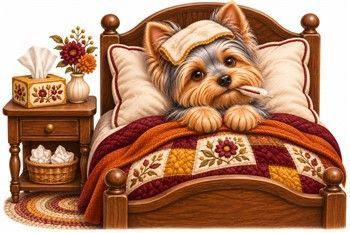
A Yorkie with a cold is a sad little sight, with a drippy nose and a lot of extra naps.
The good news is that most colds are mild and clear up on their own.
But Yorkies can be tricky. Some of their most common noises sound just like a cold and aren't. And because they're so small, a few signs that wouldn't worry anyone in a big dog need a closer look in a tiny breed like the Yorkie.
Here's how to tell a cold from kennel cough, dog flu and the look-alikes, when to see the vet, and how to help at home, plus a simple sick-day log that makes vet visits easier.
Please note: YorkieInfoCenter is reader-supported, and some of the product suggestions on this page are affiliate links. As an Amazon Associate we earn from qualifying purchases. This is at no extra cost to you and helps us continue providing free, high-quality information.
Yorkie Colds: Quick Facts
Is there a dog cold season? Not like ours. Dogs can catch colds any time of year, but vets tend to see more cases around summer vacations and the winter holidays, when more dogs are boarded, groomed and brought to family get-togethers.
How soon do signs show up? Usually within a few days to about 10 days after contact with a sick dog.
How long are colds contagious? As long as your Yorkie has symptoms, and often for a while after. Some cold germs, like Bordetella, can keep spreading for weeks after the signs clear, sometimes up to 2 months.
Can my Yorkie catch my cold? Very unlikely, since human cold viruses don't infect dogs. The one known exception is COVID-19: people can pass it to pets, so the CDC advises avoiding contact with your pets while you're sick. And there's no evidence dog flu has ever infected a person.
Common Yorkie Cold Symptoms
A Yorkie with a cold may have:
- A runny nose (usually clear at first)
- Sneezing
- Watery eyes
- Coughing
- A stuffy, congested sound, especially while sleeping
- Less energy than usual
- A smaller appetite
- A mild fever
Do I Need to Take My Yorkie's Temperature?
If your Yorkie seems sick, it's a good idea. A warm, dry nose doesn't mean a fever, since healthy noses are often warm and dry, especially after a nap.
The only way to know is with a thermometer, and a digital rectal one is the most accurate. Put a little petroleum jelly on the tip and gently insert it about half an inch to an inch, staying closer to half an inch for a tiny Yorkie or puppy, and never force it.
A healthy Yorkie's temperature usually runs about 101 to 102.5°F, though a reading down to about 99.5°F can still be normal. At 103°F or higher, your Yorkie has a fever, so call your vet. At 106°F or higher, it's an emergency, since a fever that high can damage the organs.
Is It a Cold, Kennel Cough, Dog Flu or Something Else?
This confuses a lot of pet parents, so here it is in plain words.
Vets group contagious breathing infections in dogs under one name: canine infectious respiratory disease, or CIRD. A handful of germs cause most of them, mainly Bordetella bacteria, the canine parainfluenza virus, canine adenovirus type 2 and the dog flu virus, and many dogs catch two or three at once.
What you see depends mostly on where the infection settles:
- A dog cold: Vets often call this a mild upper respiratory infection. It stays mostly in the nose and throat, so you'll see the usual sniffles and sneezing, sometimes with a light cough. Most colds clear up in about 1 to 2 weeks.
- Kennel cough: The infection settles in the windpipe and the airways leading to the lungs. The giveaway is a hacking, honking cough. Vets call it canine infectious tracheobronchitis. The name sounds alarming, but most cases are mild and gone in 1 to 3 weeks.
- Dog flu: Caused by a flu virus, H3N8 or H3N2 in the US. It usually hits harder than a cold, with a fever and a very tired pup. Other signs include a lasting cough, a thick nose drip, runny eyes and less interest in food. Most dogs recover in 2 to 3 weeks, and some show no signs at all but can still spread it.
The same germs can cause both a cold and kennel cough, so a cold can turn into kennel cough, and many dogs have a bit of both.
Kennel cough and the flu can sometimes turn into pneumonia, especially in puppies, so don't brush either one off.
Other Common Look-Alikes
Not every sniffle, snort or cough is a cold. These look-alikes aren't contagious, but a couple of them need a vet.
#1 Reverse Sneezing
Reverse sneezing is a sudden burst of loud, backward snorting, with the neck stretched out. It's scary to watch, but it's over in less than a minute and your Yorkie acts normal right after. It's common in small breeds and mostly harmless. Gently rubbing your Yorkie's throat can help it pass, and it's worth mentioning to your vet if it happens often.
#2 Allergies
Allergies can cause sneezing, a clear runny nose and watery eyes too, but usually with itchy skin, paw licking and no fever. They often come back with the seasons. Your vet can help figure out the trigger, and our guide to Yorkie allergies covers the most common ones.
#3 A Tooth Infection or Something Stuck in the Nose
Sneezing with a drip from just one nostril, sometimes with a little blood, can mean a tooth problem. Yorkies are very prone to dental disease, and an infected upper tooth can eat through the thin bone into the nose, leaving a small hole called an oronasal fistula. Keeping up with dental care helps prevent it.
Something stuck in the nose, like a grass seed, usually brings sudden, hard sneezing and pawing at the face. In either case, call your vet.
#4 Collapsed Trachea
A dry, honking cough that comes and goes can be a collapsed trachea, a long-term condition, not an infection. It often flares with excitement, heat, humidity or pulling against a leash. Yorkies are one of the breeds most at risk, especially as they get older, which is one more reason a Yorkie should always wear a harness, never a collar.
Kennel cough can honk too and can make a collapsed trachea flare up, so only a vet can tell for sure. Call your vet, and if your Yorkie is struggling to breathe or the gums look blue or gray, go to an emergency vet right away.
For other nose troubles, like dryness, crusting or nosebleeds, see our Yorkie nose guide.
How Do Yorkies Catch Colds?
Mostly from other dogs. The germs spread through coughs, sneezes, nose-to-nose hellos, and shared water bowls and toys.
Yorkies usually pick up cold germs where dogs gather, like boarding, doggy daycare, dog parks, puppy classes and the groomer. Since Yorkie hair keeps growing, many Yorkies see a groomer every 4 to 8 weeks, which adds up to a lot of time around other dogs.
Sniffles that start a few days after a grooming visit or a boarding stay? That timing is a big clue that it's a cold they caught there, not allergies.
Cats can catch a couple of the same germs, too. Bordetella (a common cause of colds in dogs) and dog flu can both infect cats, so if one pet in the house gets sick, keep an eye on the others.
And the weather? Chilly air doesn't cause colds, but going outside with wet hair after a bath is still risky. A small, wet Yorkie loses body heat fast, which can lead to hypothermia, a dangerous drop in body temperature. Always dry your Yorkie completely before heading out in the cold.
When to See the Vet
Call your vet if your Yorkie:
- Has a honking cough
- Is a young puppy (< 1 year) or a senior (8+ years)
- Has a cough that's getting worse, or isn't starting to improve after 5 to 7 days
- Has a thick yellow or green nose drip
- Has a fever of 103°F or higher
- Stops eating or drinking
Go to the vet right away if your Yorkie:
- Has a deep, wet cough with fast or hard breathing, which can mean pneumonia
- Is struggling to breathe
- Has pale, blue or gray gums
- Is very weak or hard to wake
- Is wobbly, trembling or having a seizure (possible low blood sugar from not eating)
Is It Mild Enough for Home Care?
Most of the time, a cold or mild kennel cough is nothing to panic about. It's likely mild enough to care for at home if your Yorkie:
- Is still eating and drinking
- Still has some energy
- Is breathing normally while resting
- Has a clear nose drip, not a thick or colored one
- Seems to be slowly getting better, not worse
- Doesn't have a honking cough, or your vet has already checked it
If that sounds like your Yorkie, the home remedies below can help. Just keep a close eye out for any changes.
Home Remedies for a Yorkie Cold
These steps can help your Yorkie feel more comfortable while a cold or mild kennel cough runs its course.
#1 Run a Cool-Mist Humidifier
Moist air near your Yorkie's resting spot helps loosen mucus and soothes a sore throat. Choose cool mist over warm mist, since a warm-mist unit can burn a curious pup if it tips over. Rinse the tank every day or two so mold doesn't grow, and don't add essential oils to the water, since breathing in concentrated oils can irritate a dog's airways.
#2 Try a Steamy Bathroom
Run a hot shower with the door closed, then sit in the bathroom with your Yorkie for 10 to 15 minutes, staying out of the water. The warm steam loosens mucus so your Yorkie can breathe more easily. Afterward, gently wipe away any loosened mucus, and dry your Yorkie's coat if it got damp so they don't get chilled.
#3 Keep the Face Clean
Gently wipe the nose and eyes with a soft, warm, damp cloth, using a clean part of the cloth for each eye. Dried mucus can crust over the nostrils and make a stuffy nose even worse, so a few gentle wipes a day help. Pulling the hair up into a topknot keeps it out of a drippy nose and watery eyes.
#4 Warm Up the Food
A stuffy nose can make dinner seem boring, since dogs rely on smell to enjoy food. Warming it a little brings the smell back. Test it with your finger first to make sure it's warm, never hot. A spoonful of wet food or a few drops of fish oil made for dogs can also help, since both have a strong smell.
#5 Keep Water Close
Put fresh water right next to your Yorkie's bed, since staying hydrated keeps mucus thinner and easier to clear. Low-sodium chicken broth can tempt a Yorkie who isn't drinking much. Check that it has no onion or garlic, since both are toxic to dogs.
#6 Rest and Warmth
Skip long walks and rough play until your Yorkie's energy and breathing are back to normal, and keep potty trips short. A cozy bed away from drafts helps your pup rest. Yorkies don't have an undercoat, so a sweater helps on cold days.
#7 Keep Them Away From Other Dogs
Cold germs can keep spreading for a while, so skip daycare, the groomer and dog parks until your vet says it's safe. If you have other dogs at home, give the sick one its own water bowl, and wash shared toys and bedding in hot water.
Why Not Eating During a Cold Is a Bigger Deal for a Yorkie
A big dog can skip a meal or two while sick and be fine. A Yorkie is a different story.
Tiny bodies don't store much energy. When a Yorkie stops eating, blood sugar can drop. This is called hypoglycemia, and it's most common in puppies, though a sick adult can get it too.
Signs of low blood sugar include:
- Weakness or wobbly walking
- Shaking or trembling
- Being very sleepy or hard to wake
- A dazed, glassy-eyed look
- Seizures, in severe cases
If you see these signs, rub a little honey or corn syrup on your Yorkie's gums and call your vet right away. Don't pour it into the mouth, since it could go down into the lungs.
A good rule of thumb: if a Yorkie puppy skips a meal, call the vet that same day. If an adult Yorkie hasn't eaten for a full day, or won't drink, call the vet.
Can You Offer Benadryl or Human Cold Meds?
Human cold medicine, no. Benadryl, only if your vet says so.
Many human cold and flu medicines are dangerous for dogs, especially one as tiny as a Yorkie. Decongestants, ibuprofen, naproxen and acetaminophen (Tylenol) can all be toxic to dogs. Some sugar-free cough drops also contain xylitol, a sweetener that's very dangerous to dogs, so keep them well out of reach.
What about Benadryl? Vets do sometimes use it for dogs, mostly for allergies. But it doesn't treat a cold, and the dose for a tiny Yorkie has to come from your vet. Never give a "cold," "sinus" or "D" version, since those have extra ingredients that aren't safe for dogs.
The Simple Sick-Day Log
Vets ask a lot of questions, and when you're worried, the details are easy to forget.
Jot down a few notes once or twice a day:
- Temperature
- How much food they ate
- How much water they drank
- Pee and poop (normal or not)
- Coughing or sneezing, and how often
- Nose drip, and its color
- Energy level
- Any medicine given
Bonus tip: Record a short video of any cough or snort on your phone. Lots of dogs go quiet at the vet's office, so a video lets the vet hear it for themselves.
Can You Prevent Colds?
You can't prevent every cold. But you can lower the odds.
- Choose groomers, boarding kennels and daycares that keep things clean and turn away sick dogs. It's fair to ask about both before you book.
- Bring your own water bowl to parks and stores, and skip the meet-and-greet with any dog who's coughing or sneezing.
- Wash your hands after petting other dogs, since germs can ride along on hands and clothes. Wash your Yorkie's bowls, toys and bedding often, too.
- Stay away from your daycare or dog park for a couple of weeks if you hear about a cough going around.
- There are also vaccines for some cold germs, like Bordetella and dog flu, but they're optional. Vets recommend them based on a dog's lifestyle, such as how often they're boarded, groomed or at daycare. Small dogs are more likely to have vaccine reactions, and the risk goes up with each shot given at the same visit, so it's wise to be cautious. Talk with your vet about whether your Yorkie truly needs them, and ask about spacing shots out instead of giving several at once.
A Final Note
A cold can knock a tiny Yorkie off their feet for a few days, but with a cozy bed, warm food, a little steam and plenty of cuddles, most bounce back within a week or two.
Keep an eye out for the warning signs, jot down how your pup is doing, and trust your gut. You know your Yorkie better than anyone, and if something feels off, a quick call to your vet is always worth it.
Here's to a happy, healthy Yorkie!
Helpful Yorkie Articles:
The Best Treats for Yorkies with Sensitive Tummies - Does your Yorkie have trouble with snacks and food that cause gas, cramps, or other stomach issues? See these fantastic, super-healthy and tasty treats that can be given with peace of mind.
Must-Have for Teeny Yorkshire Terriers - If your Yorkie is a tiny bundle of cuteness, these are the can't-do-without basics to help make life easier for you and safer and more comfortable for your little guy or gal.
Busy Pet Parent Care Item Check List - Are you always on the go? Feel pressed for time when it comes to all the care tasks your Yorkie needs? See our picks for items that help you save time while providing a bit of pampering for your sweetie.
Yorkshire Terrier Do and Don't List - A super-helpful concise guide on the most important do's and the most vital don'ts for this amazing toy breed. How many are you following?
Winter Care for Yorkshire Terriers - Seasonal tips to ensure your Yorkie stays warm, comfortable and content during the short, cold days of winter. Helpful advice for puppies, adults and seniors.
Yorkshire Terrier Separation Anxiety - Strategies to help your Yorkie cope with being home alone, fostering independence and reducing loneliness and stress.